Getting started in ceramics: basic techniques and mistakes to avoid
Ceramics is an art where understanding the material matters as much as the gesture. Before even talking about mistakes, you have to understand that there are several fundamental ways of working clay.
The main ceramic techniques
We generally distinguish several broad families of techniques:
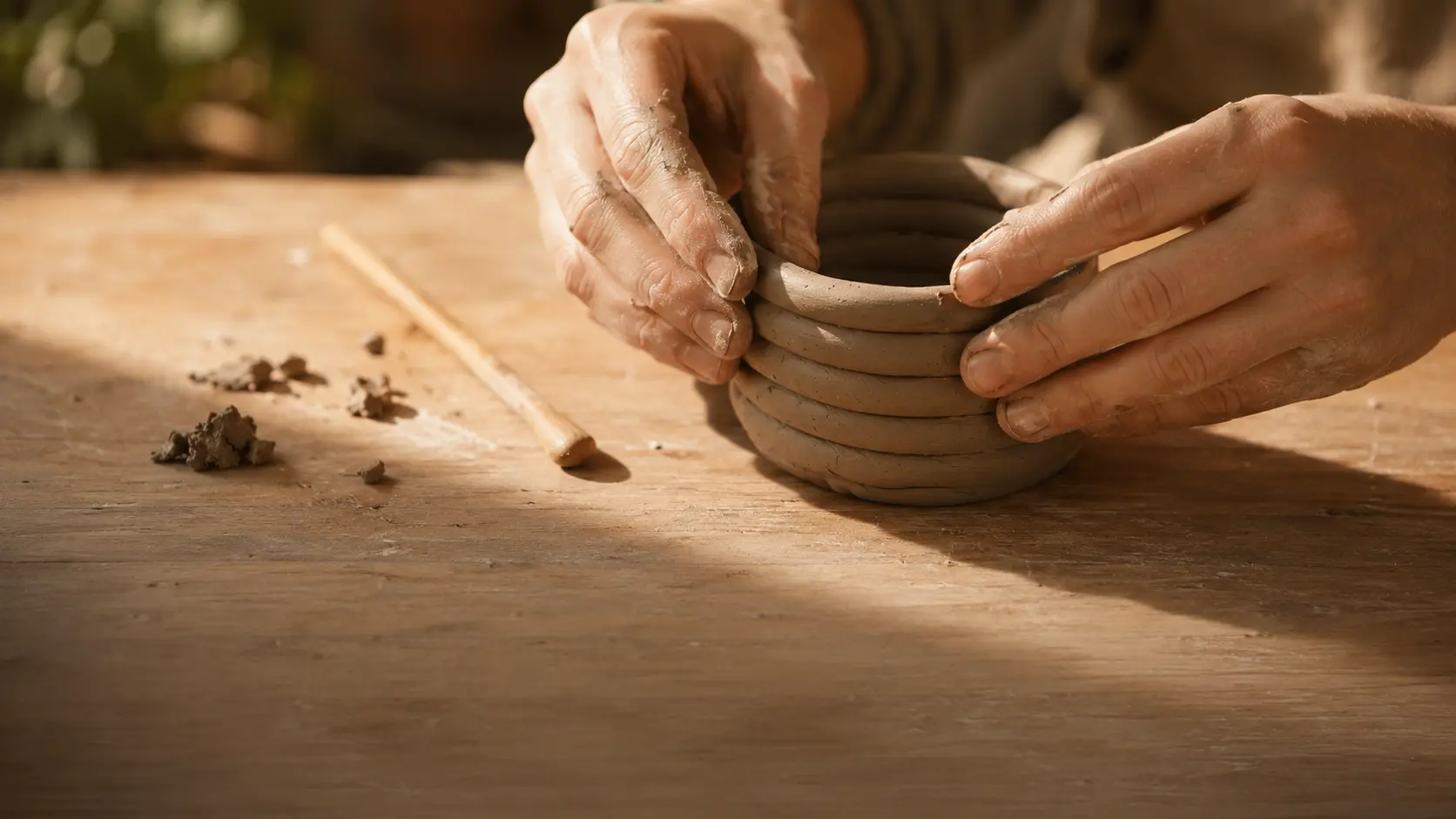
- Coils — ideal for organic shapes, large pieces and free creations.
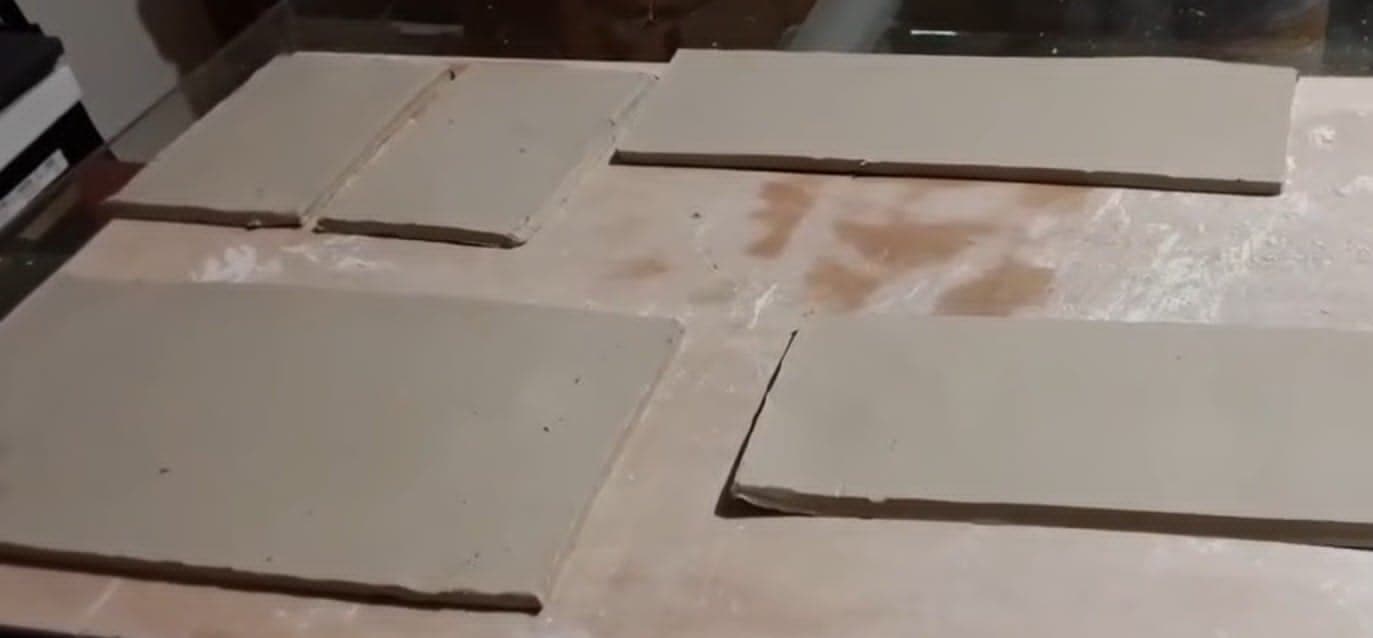
- Slabs — perfect for geometric shapes, boxes, mugs and architectural structures.
- Sculpture / hand-building in the mass — for sculptures, faces, figures and expressive forms.
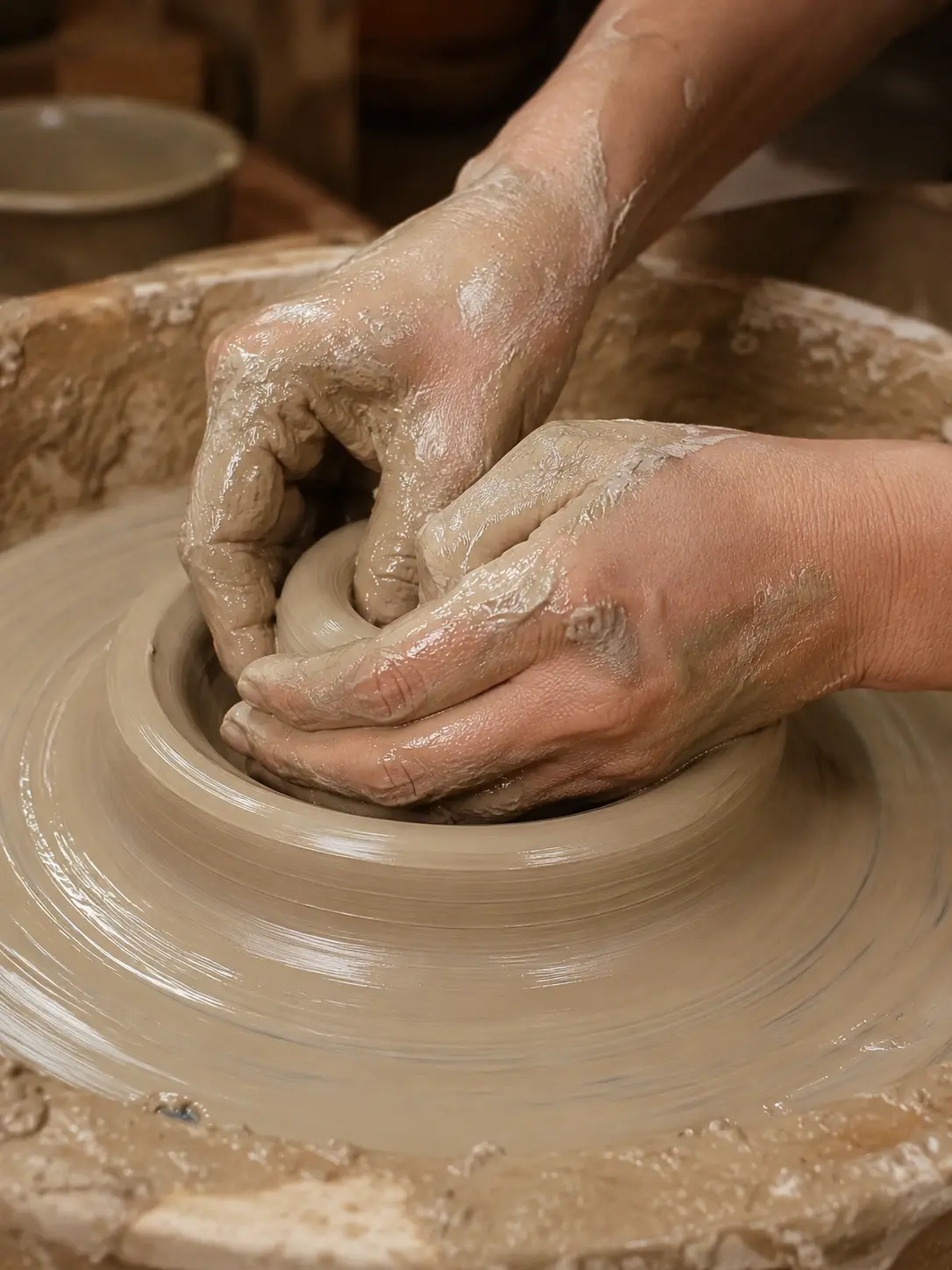
- Wheel throwing — suited to round, symmetrical pieces (bowls, cups, vases…).
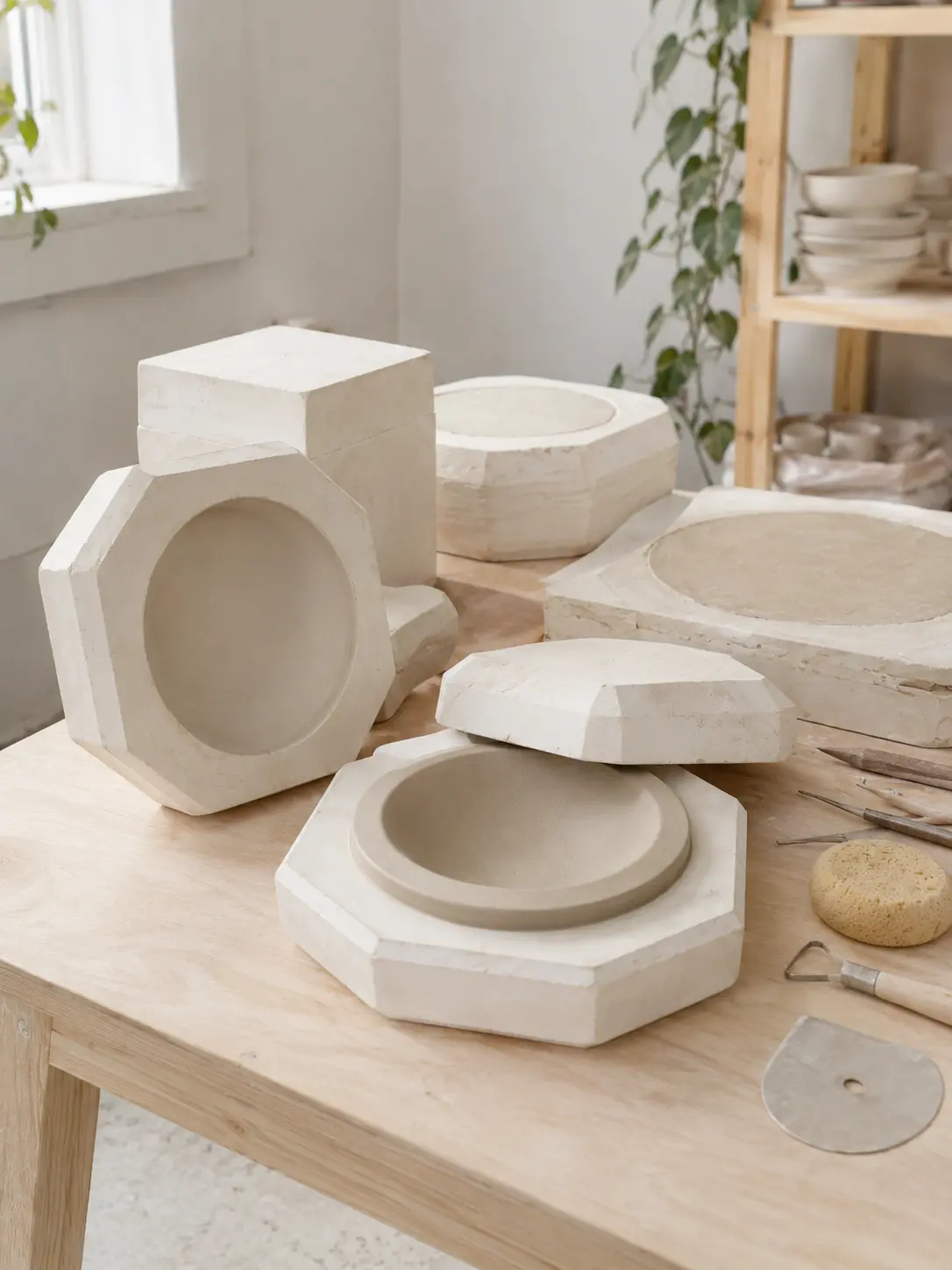
- Slip casting in plaster moulds — used for series and identical or complex forms.
Throwing and casting are very specific worlds, with their own gestures, constraints and techniques. In this article we focus mainly on the three great approaches of hand-building: coils, slabs and sculpting in the mass.
Understanding clay: a living material
Whatever the technique, some rules remain universal. Clay constantly shifts between moisture and rigidity, and every working step depends on its state.
One notion is essential: the leather-hard stage. It is an intermediate point where the clay is no longer soft, but not yet fully dry. This is often when assembling, cutting, adjusting and finishing should be done.
Thickness: a fundamental balance
Thickness plays a decisive role in the success of a piece. As a rule, you work between 5 mm and 1 cm depending on the shape:
- Too thin → fragility, breakage, warping.
- Too thick → uneven drying and the risk of internal air bubbles.
Air bubbles are one of the ceramicist’s main enemies: invisible, they can cause cracks and shattering during firing.
Coils: building with patience
The coil technique consists of building the piece up gradually from rolls of clay. Use a soft, malleable clay; natural adhesion is often enough at the start, and slip is not always essential at every step.
Common mistake: trying to build up too fast. The piece must be allowed to firm up regularly, otherwise it risks sagging, warping and cracking.
Slabs: rigour and regularity
Slab work is used for geometric shapes and volumes (vases, boxes, mugs…). A few essentials:
- Prepare all the slabs you need at the same time.
- Let them reach the same drying stage before assembling.
- Avoid working slabs that are too fresh.
Crucial point: the slab thickness must be perfectly even. Otherwise, differences in drying create internal tensions that can cause cracks during firing. Likewise, joining two slabs at different drying stages causes uneven shrinkage — and therefore cracks or warping.
Sculpture: shaping in the mass
Sculpture is the freest technique, but also one of the most demanding structurally. You often start by modelling a solid form, working the volume directly, then let the piece firm up overnight or longer depending on its size.
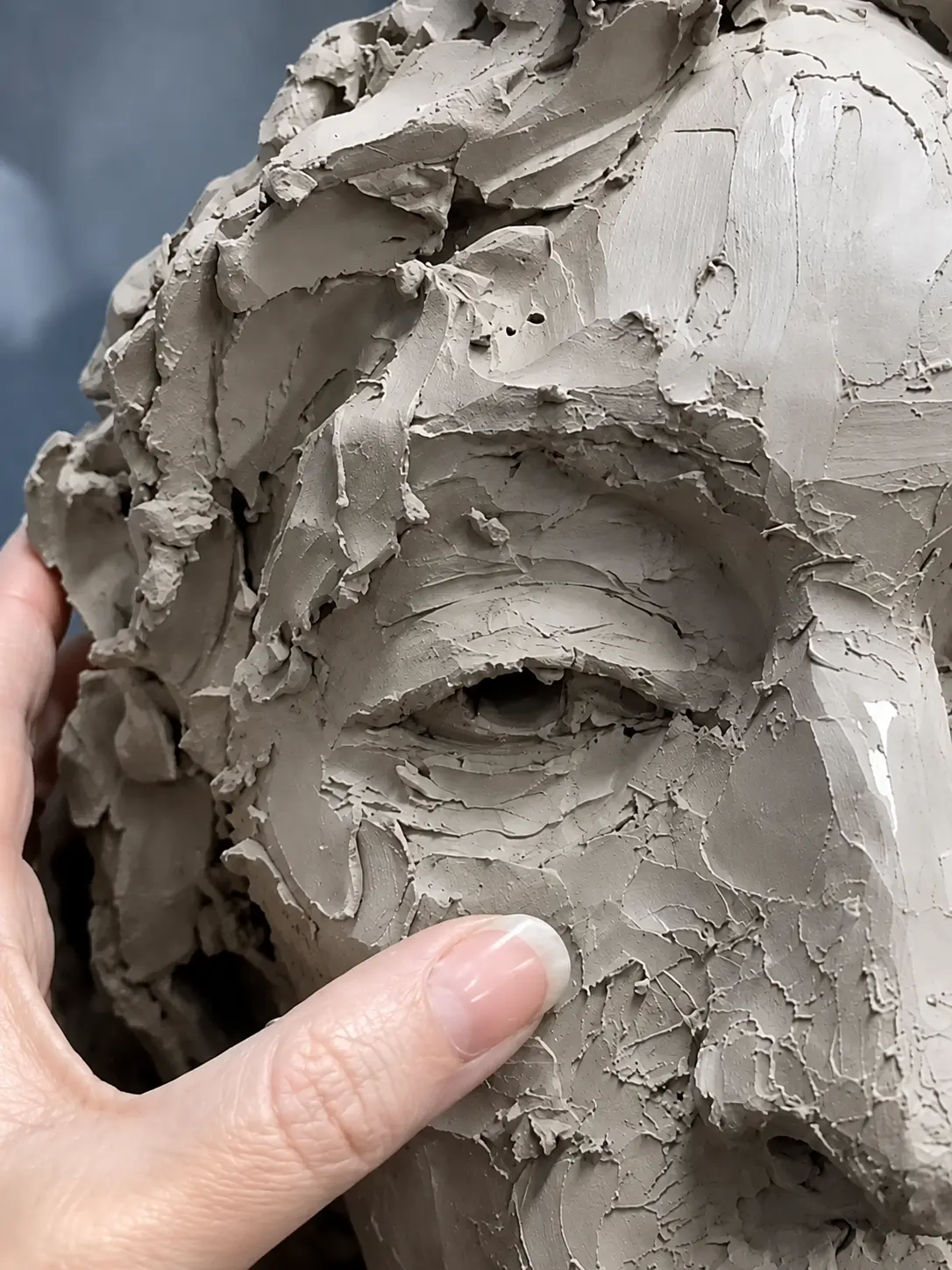
Then comes a delicate stage: hollowing out. You have to know where to cut the piece to reach the inside, hollow it without deforming the outer shape, and keep an even thickness throughout. Mistakes lead to areas too thick (internal cracks), areas too thin (fragility or breakage), or a general imbalance.
Even if the outer form is expressive, solidity depends on the inside. A successful sculpture is one with homogeneous thickness, even if you can’t see it.
Assembly: a critical step
Whatever the technique, assembly requires particular care. Ceramicists use slip: a creamy liquid clay made from the same body as the piece, acting as a natural glue. For a strong bond, scratch the surfaces carefully, apply slip generously, and press firmly without crushing — otherwise you risk cracks, separation or breakage during firing.
Once the parts are joined, it is strongly recommended to add a thin reinforcing coil along the seam. Made with a very soft clay, this small roll is applied and then carefully smoothed over the join line. This simple gesture, often overlooked by beginners, considerably strengthens the piece and limits the risk of cracks or separation during drying and firing.
Drying: let time do its work
Clay must dry slowly and naturally. To be avoided at all costs:
- Direct sunlight.
- Artificial heat.
- A dryer or forced draught.
Even if a dryer might seem convenient, it is strongly discouraged: uneven drying, internal tensions, cracks or warping. The best is always to let time do its work.
The myth: “it all comes down to firing”
Many beginners think defects are caused by firing. In reality, they are created during modelling or drying. Even when invisible to the naked eye, they are often revealed by firing, which brings out the cracks, tensions and flaws accumulated beforehand.
In short: respect the rhythm of the material
In ceramics, mistakes are rarely visible right away. They often appear hours or days later, during drying, at the first firing… sometimes only after the second, at the glazing stage. You have to accept this share of uncertainty: despite all the care given to modelling, drying and firing, a creation can be compromised at any stage. That is also what makes every success precious.
Learning to observe the material, anticipate its reactions and respect its rhythm is already the first real step towards mastering ceramics.
At Lik’Art, our art centre at 114 Avenue d’Afrique (El Menzah 5, Ariana, Tunis), we accompany exactly this discovery through our ceramic workshops, designed for beginners and for those who want to deepen their practice. Sessions take place on Wednesday, Friday and Saturday from 2 to 5 pm. And to discover the material without going through every stage, there is a lighter way in: our Creative Time, ceramic painting.
Curious beginner or practitioner looking to improve: our ceramic workshops in Tunis are the place to learn how to read the material, step by step, in a friendly atmosphere.
Read next
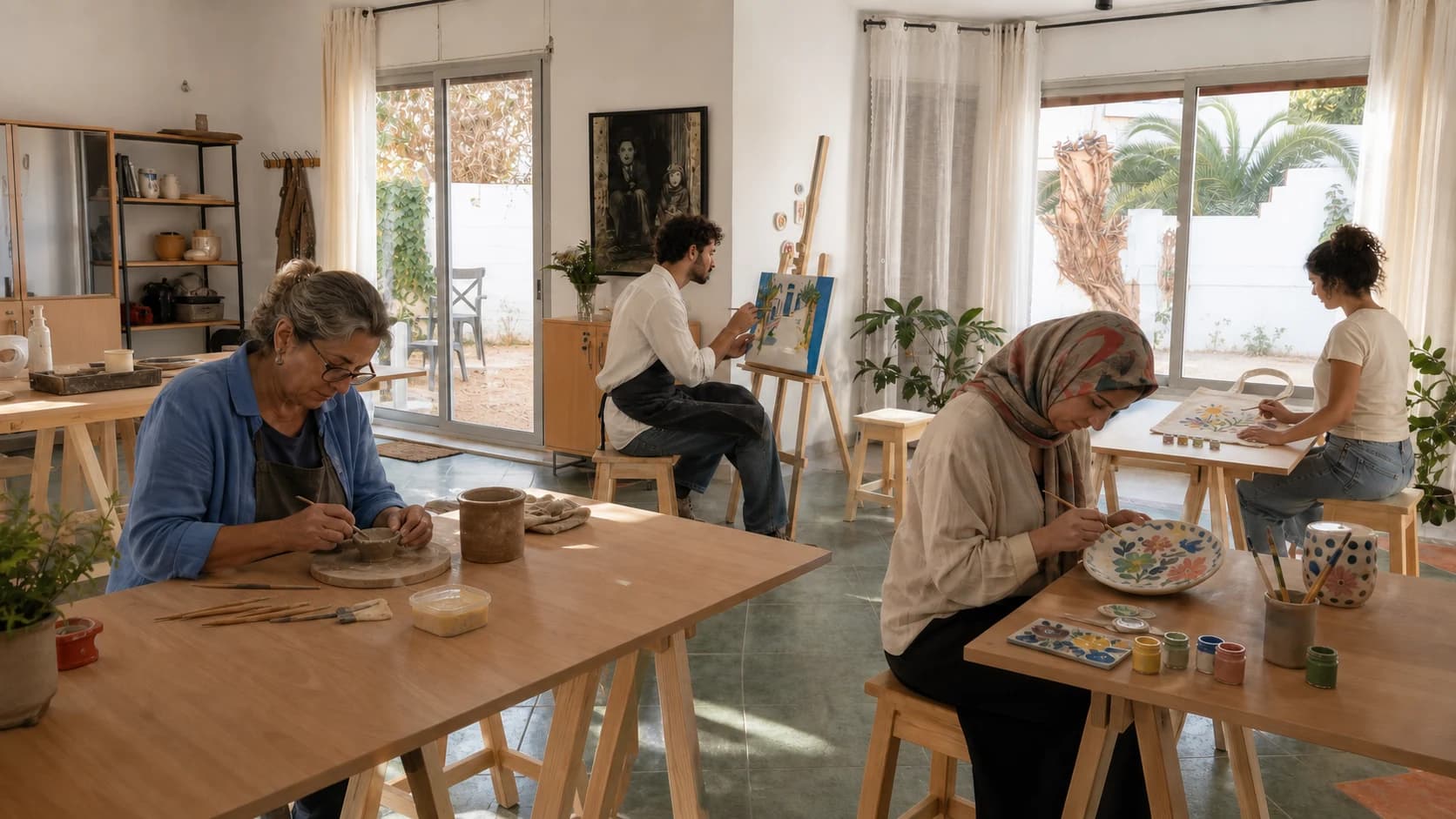
Art classes, open studio or Creative Time: what should you choose in Tunis?
Learn in a weekly class, create independently in the Co-Art Space or book a one-off Creative Time: a guide to choosing the creative formula that suits you at Lik'Art.
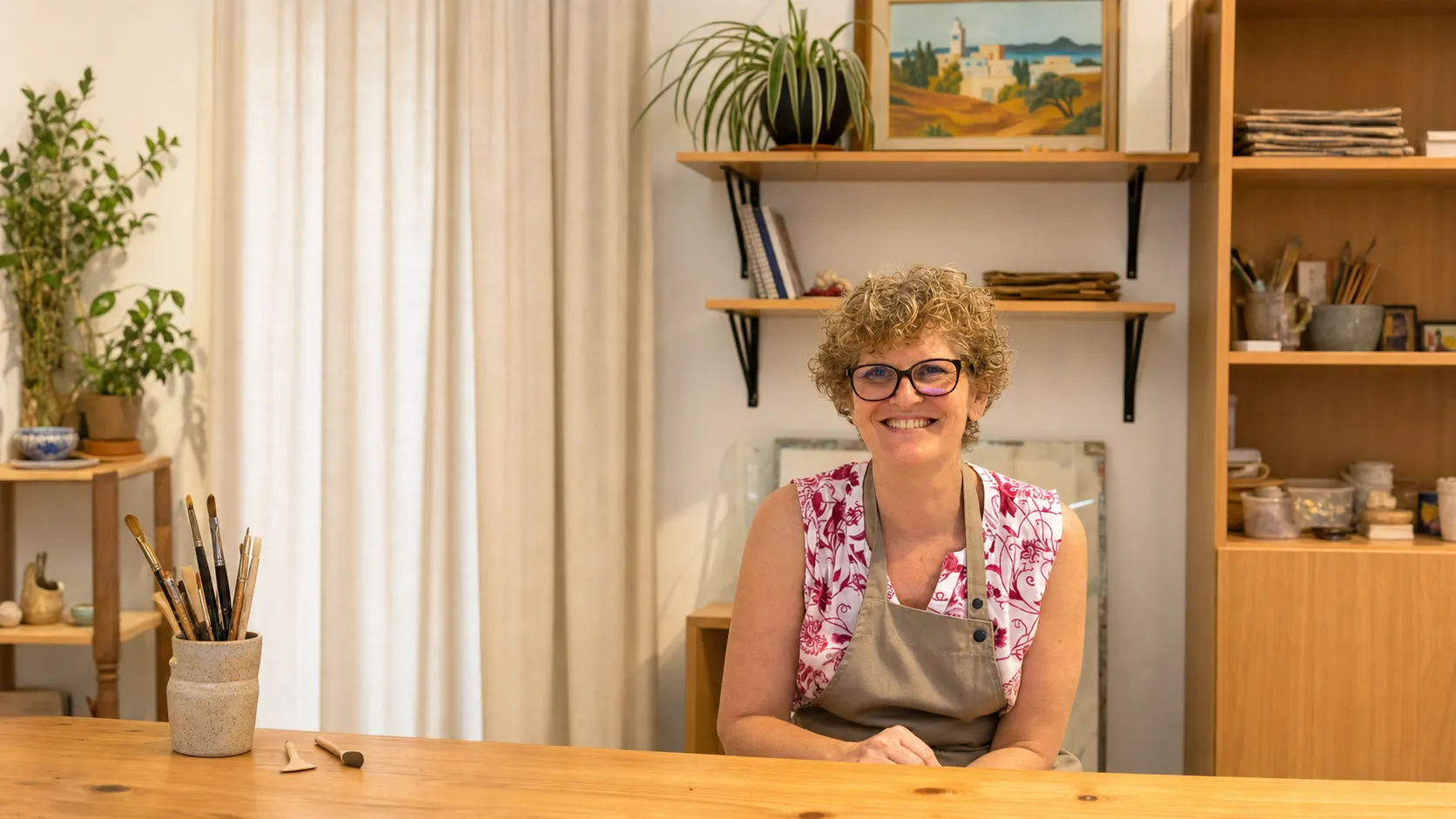
Raoudha Bouzouita Mellakh, founder of Lik'Art
A product-design graduate, an oil painter for many years, then a ceramics enthusiast: discover the journey of the founder of Lik'Art, in El Menzah 5, Tunis.