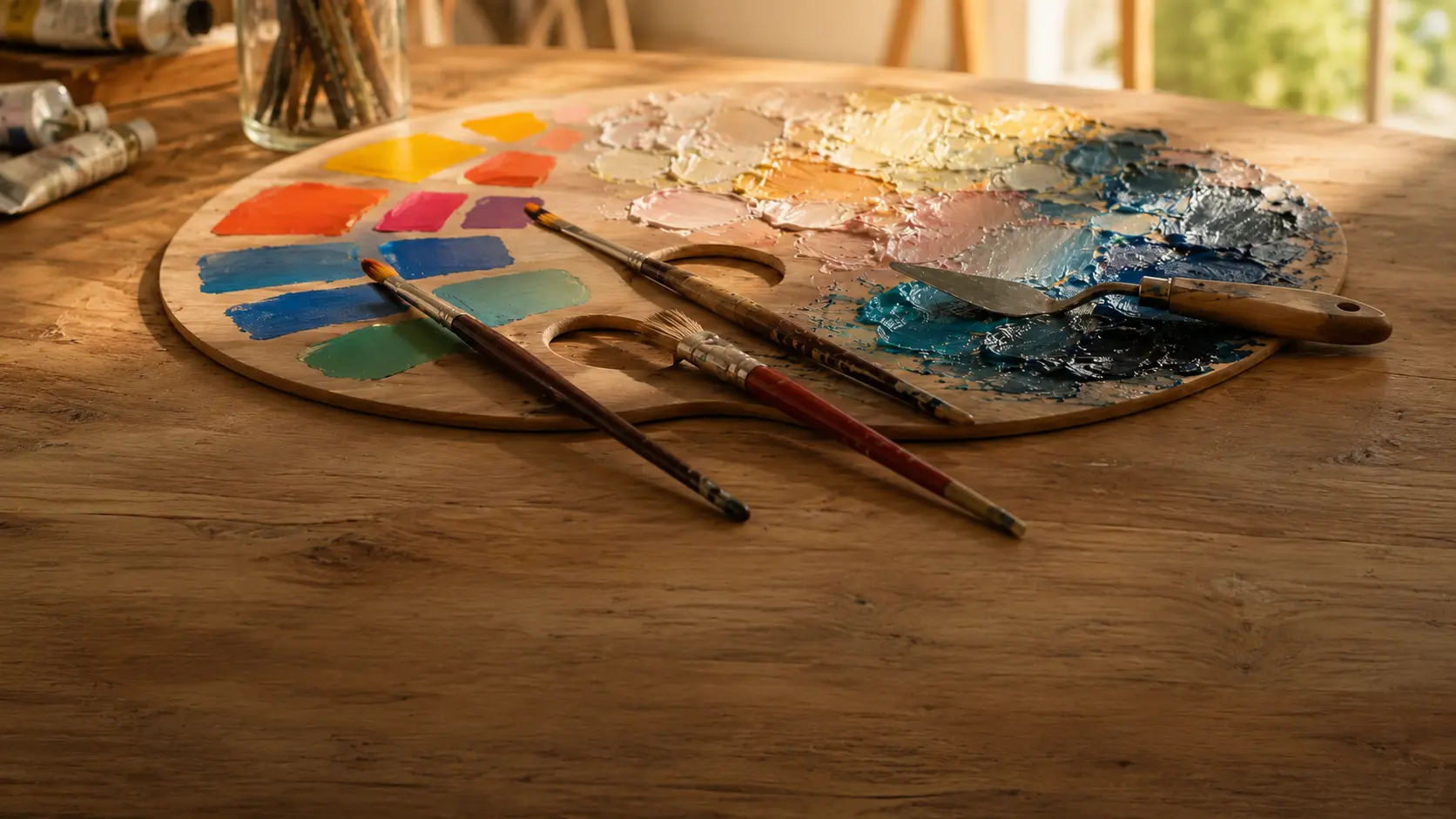
It is probably one of the first questions painting lovers ask themselves, beginners and seasoned artists alike. And yet there is no universal answer. The choice depends above all on your sensibility, on the way you work, but also on the themes and styles you want to explore.
Acrylic: speed, spontaneity and simplicity
Generally speaking, artists who lean towards abstraction very often choose acrylic. Its main strength is its fast drying time: it lets you build up layers, work spontaneously, overlap colours easily and create a piece without long waits. Acrylic is also ideal for clean flat areas, graphic compositions and experiments with texture or mixed media.
It also has a practical and economical advantage: paints, mediums and supplies are generally cheaper than for oil. It is simpler to use day to day — clean-up with water, fewer odours, easier care of your tools. That is what makes it a favourite among beginners, students and artists who work on large formats and use a lot of material.
Oil paint: slowness, nuance and depth
Conversely, those who love subtle blends, soft transitions and meticulous colour work often turn to oil paint. Thanks to its much slower drying time, oil lets you rework an area for several hours, even several days. Gradients are smoother, mixes more delicate, and the material offers a particular richness that is highly prized in portraits, landscapes and realistic painting.
Knife work also finds a privileged place here: its thicker texture allows for relief, impasto and a depth many artists seek. Oil is also known for its longevity: well made and well kept, it can last for decades — even centuries — while keeping the depth and freshness of its colours. That particular luminosity, tied to rich pigments and the work of glazes, is part of its timeless charm.
When a strength becomes a constraint
But what is an advantage for some can become a drawback for others. The fast drying of acrylic, so practical for working quickly, can frustrate painters who like to take their time or rework their blends. Conversely, the slowness of oil, so precious for nuance and detail, can feel restrictive for those who like to move fast or pile on many layers in little time.
And yet, for many artists working in oil, that very slowness is fully part of the pleasure of painting.
A question of one’s relationship to time
On large formats, drying time sometimes becomes almost imperceptible: many painters start their canvas at the top, and by the time they work their way down, the first areas have already begun to dry. Some artists spend several weeks, sometimes several months, on a single work — the painting is built slowly, by successive layers, to create depth, nuance and vibration of colour.
This is also where oil reveals one of its most fascinating qualities: the work of transparency. Through glazes and fine translucent layers, light seems to pass through the material and give the painting a depth that acrylic reproduces with difficulty in the same way. Where acrylic favours immediacy and the energy of the gesture, oil invites slowness, gradual construction and contemplation.
So, which one should you choose?
In the end, it is not really about deciding which paint is “better”, but about discovering the one that best fits your sensibility, your artistic intention and your personal way of creating. And many artists end up practising both, depending on their desires, their projects… or simply their mood of the moment.
Exploring both in Tunis, at Lik’Art
This is exactly the exploration we encourage at Lik’Art, our art centre at 114 Avenue d’Afrique, in El Menzah 5. Our painting workshops are open to beginners and confirmed artists alike, with two complementary approaches led by two artists with different worlds:
- Hamza Dhahbi — a more academic approach, combining drawing and painting, ideal for building solid foundations and developing the artistic eye.Wednesday 6–8 pm · Saturday 10 am–1 pm
- Faten Sabbah — a freer, more intuitive and less academic approach, centred on personal expression, colour and a direct relationship to the material.Thursday 6:30–8:30 pm
Because beyond technique, every artist also needs to find the method, the atmosphere and the world in which they feel free to create. For enrolment and pricing details, everything is on our FAQ page.
Whether you are drawn to the energy of acrylic or the depth of oil, our painting workshops in Tunis are a space to explore, make mistakes, and find your own gesture.
Read next
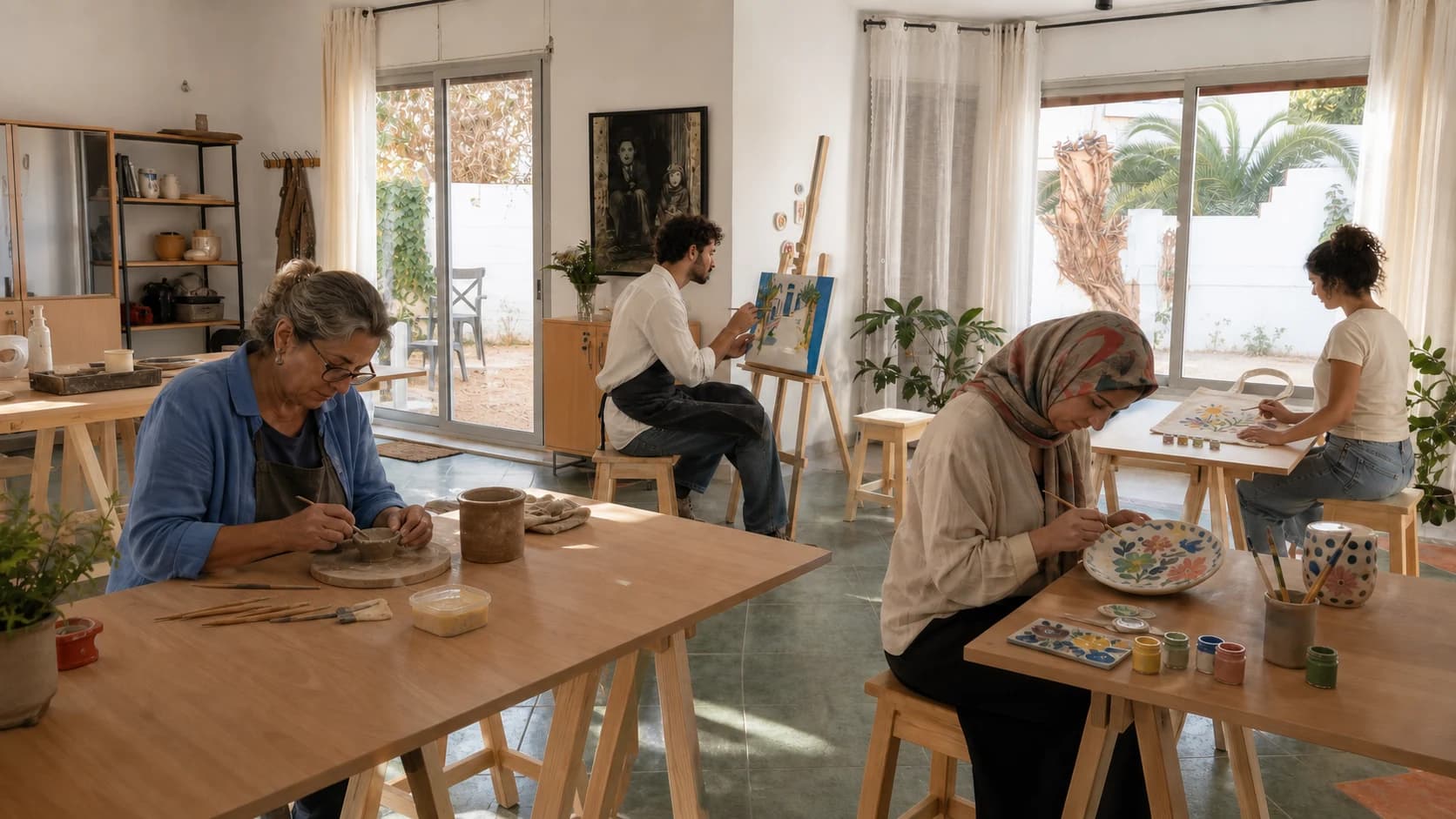
Art classes, open studio or Creative Time: what should you choose in Tunis?
Learn in a weekly class, create independently in the Co-Art Space or book a one-off Creative Time: a guide to choosing the creative formula that suits you at Lik'Art.
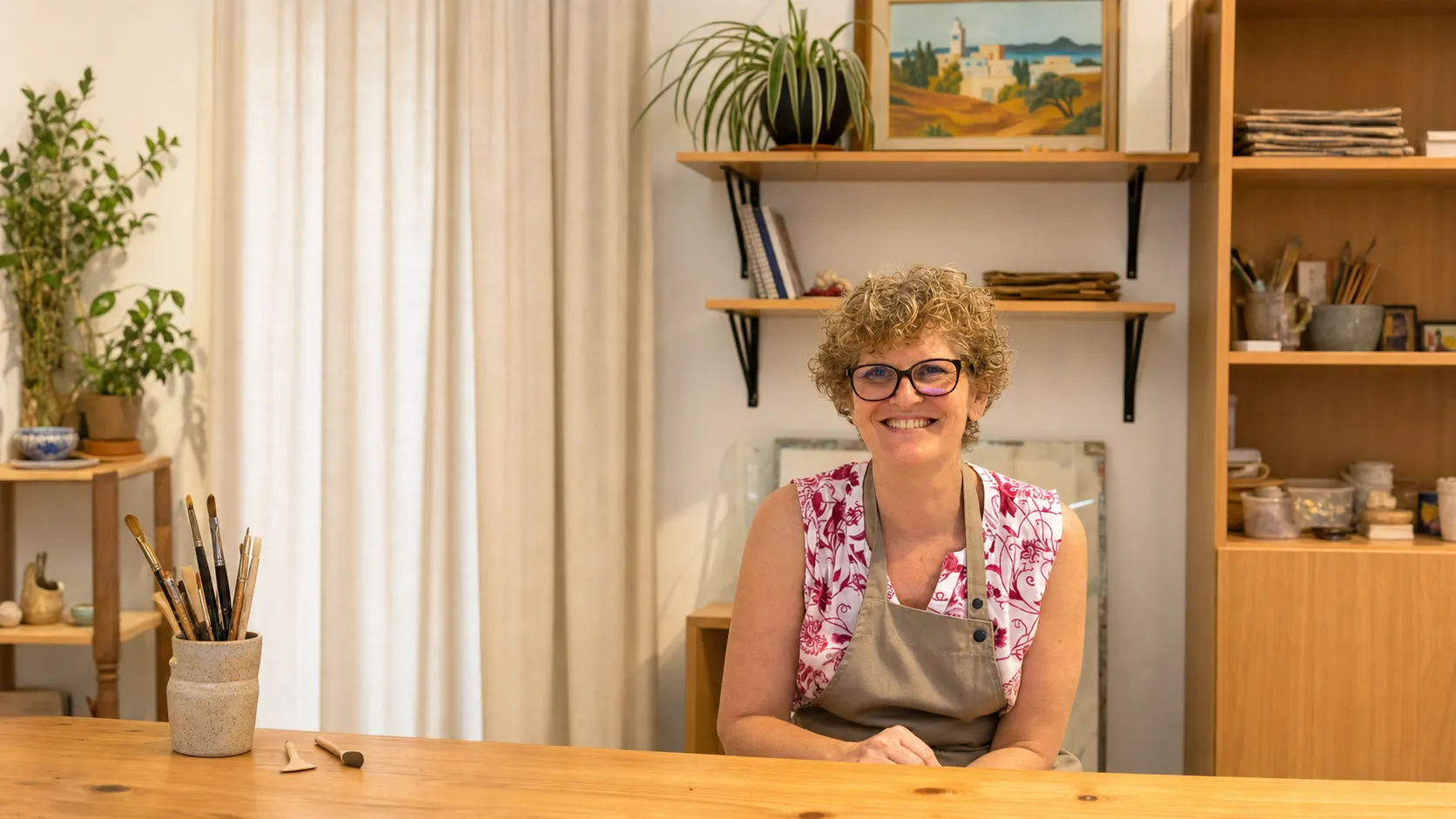
Raoudha Bouzouita Mellakh, founder of Lik'Art
A product-design graduate, an oil painter for many years, then a ceramics enthusiast: discover the journey of the founder of Lik'Art, in El Menzah 5, Tunis.