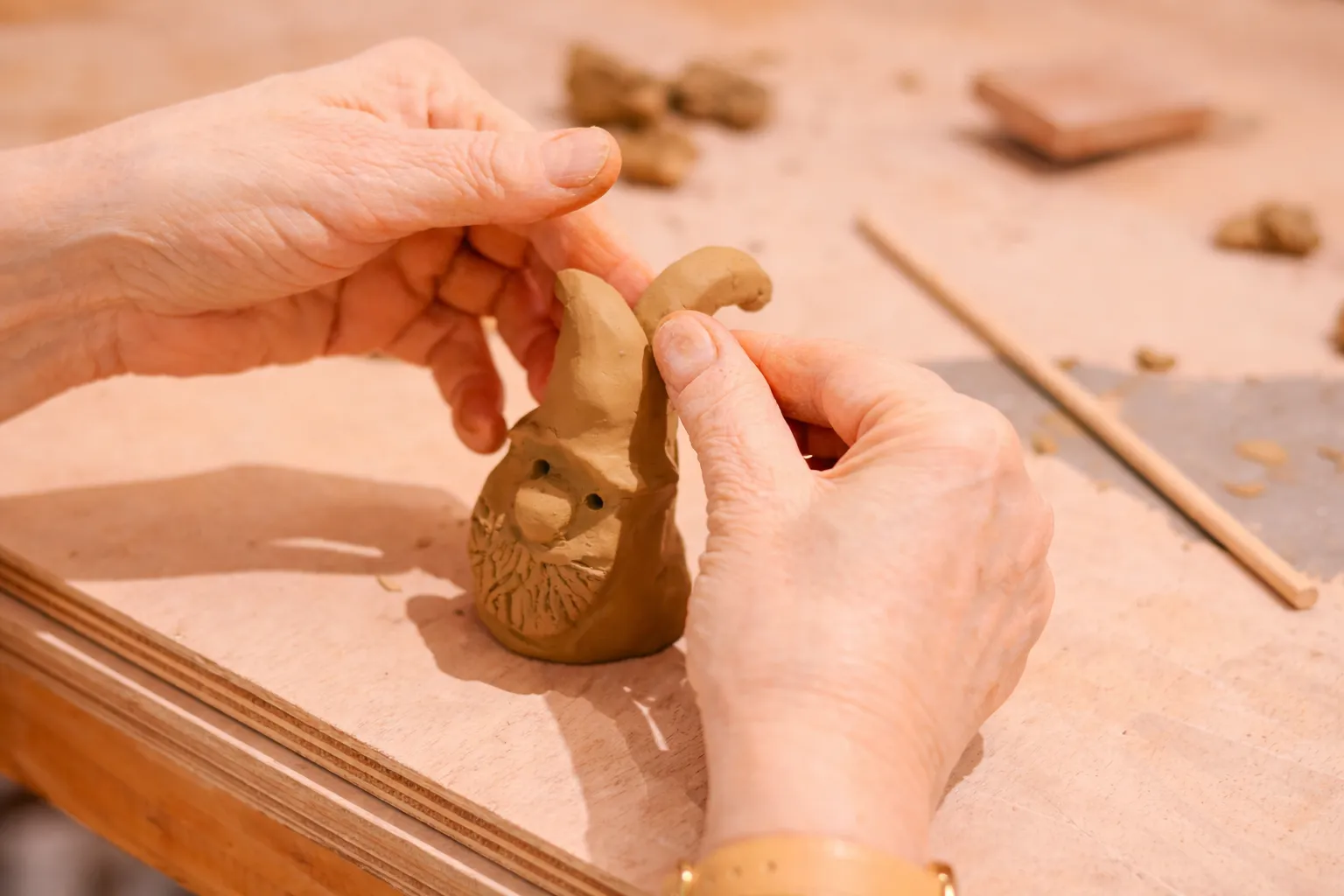
Ceramics, between mastery and chance: how a piece is born in a Tunis studio
Ceramics is arguably one of the most demanding arts there is. When it comes to a unique creation rather than serial work, every piece becomes an adventure of doubts, technical choices, waiting — and sometimes disappointment.
The first question: which technique for this piece?
It all starts from the very first moments of working with clay. Before even creating, the ceramicist has to ask an essential question: which technique will be best suited to this piece?
- Coils — for tall or curved pieces.
- Slabs — for geometric shapes, boxes, containers.
- Sculpting — for figurative or organic pieces.
- The potter's wheel — for pieces of revolution (bowls, vases, cups).
- Assembly — combining several techniques.
Each creation imposes its own constraints and forces the search for specific solutions. The choice is never trivial: it shapes everything that follows.
The two great enemies: air bubbles and cracks
In ceramics, every step prepares the next, and the slightest haste tends to be paid for later on. Behind a piece that seems to be moving along normally, the flaws that will appear after firing may already be hiding.
The ceramicist's two great enemies are well known:
- Air bubbles, invisible to the eye, can shatter a piece during firing. Hence the importance of careful kneading from the very start.
- Cracks often appear when assembling parts that don't share the same level of moisture. A simple difference in drying can be enough to compromise several days of work.
That's also what ceramics is about: an art where the final quality depends as much on what you do as on what you avoid doing.
Drying: a school of patience
Then comes the long drying phase. Here again, patience is non-negotiable. Many don't understand why a piece needs to dry slowly for several days, sometimes several weeks. And yet, trying to rush the process can damage the creation beyond repair.
During that time, the ceramicist watches the piece daily, sometimes discovering small cracks they try to fix as long as those aren't structural. It's a silent, almost meditative stage — and for many beginners, the hardest to accept.
The first firing: the moment of truth
Once the piece is perfectly dry comes the first firing. And with it, a first wave of anxiety.
Opening the kiln after firing is always an emotional moment: hope, worry, relief… or disappointment. Cracks that were invisible before firing can suddenly appear and ruin all the work accomplished.
It's one of the most singular moments of the practice: you place a piece inside a kiln and accept that, for a few hours, you're no longer the one deciding.
Glazing: anticipating the invisible
But the journey is far from over. Then begins one of the most complex stages of ceramics: glazing.
The great challenge is to anticipate the final result while the appearance of raw glazes often has absolutely nothing to do with the colours after firing. The ceramicist has to choose between different techniques:
- Glaze, slip, transfers, screen printing, effect glazes…
- Combining colours with a vision of the final outcome
- Anticipating chemical reactions
- Accounting for the type of clay, the temperatures, the thickness of each layer
And despite experience, a share of randomness always remains. Because in ceramics, nothing is ever fully under control.
The second firing: the real gamble
Then comes, at last, the second firing. The real gamble.
For sometimes 24 to 48 hours in an electric kiln, the ceramicist lives in waiting. So many factors come into play: the nature of the clay, the temperatures of the first and second firings, the chemical composition of the glazes, the unpredictable reactions between materials…
And when the kiln finally opens, only a ceramicist can truly understand that mix of impatience, worry and jubilation. Because after several days — sometimes several weeks — of work, a piece can reveal an unexpected wonder… or an irreversible disaster.
Living this adventure in Tunis
This is precisely the journey, in all its complexity, that we accompany at Lik'Art, our art studio at 114 Avenue d'Afrique, in El Menzah 5. Our ceramic workshop offers the essential techniques — modelling, the wheel, painting on ceramics — guided by an experienced team, with an on-site kiln and all materials included.
And for ceramicists who already work independently but don't have their own kiln, we also offer a firing service for pieces made outside the centre. The details are on our FAQ page.
For those still hesitating to dive into a full creation, there is also a lighter way in: our Creative Time, ceramic painting. You pick an already-shaped piece, paint it, and we take care of the glazing and firing — a chance to discover the material without diving straight into all the stages described above.
The beauty of the unexpected
That, perhaps, is what makes ceramics beautiful in the end: an art where technique, patience, experience and the acceptance of the unexpected must learn to coexist. No piece is ever quite the same as the one we imagined. And that is no doubt what makes each of them so precious.
Whether you are a curious beginner or a confirmed practitioner, our workshop is a space to discover, experiment, and accept what escapes mastery.
Read next
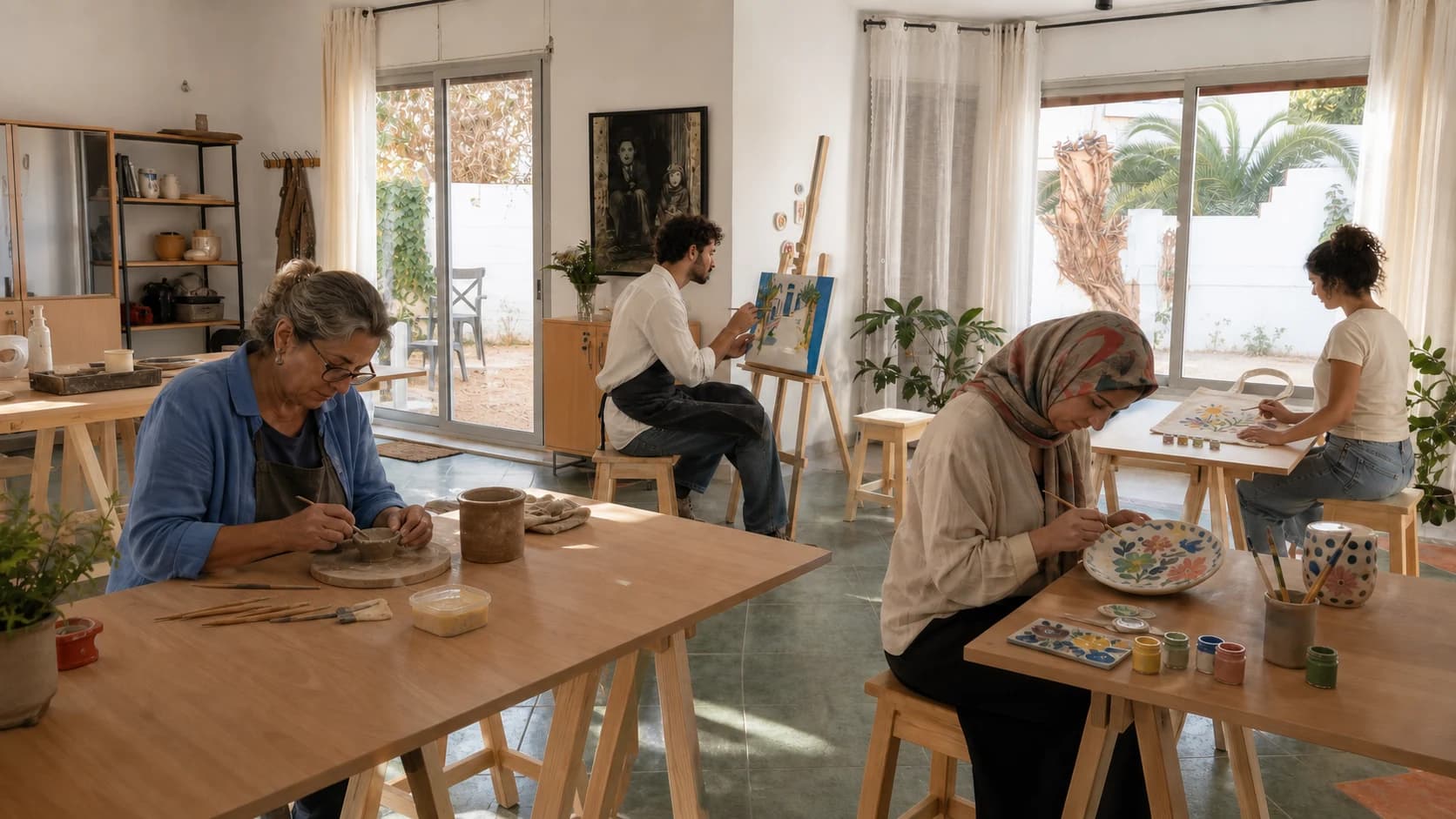
Art classes, open studio or Creative Time: what should you choose in Tunis?
Learn in a weekly class, create independently in the Co-Art Space or book a one-off Creative Time: a guide to choosing the creative formula that suits you at Lik'Art.
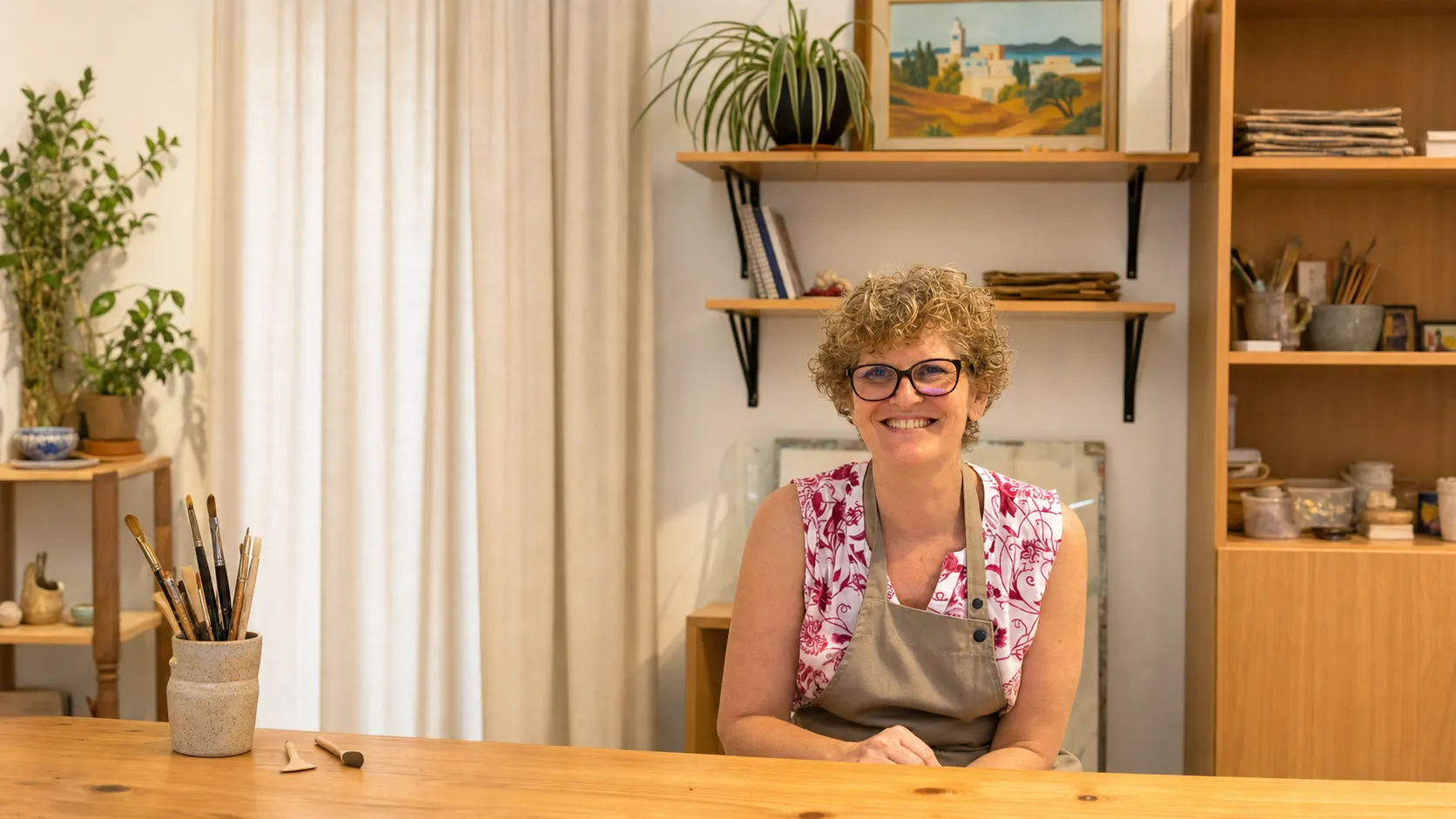
Raoudha Bouzouita Mellakh, founder of Lik'Art
A product-design graduate, an oil painter for many years, then a ceramics enthusiast: discover the journey of the founder of Lik'Art, in El Menzah 5, Tunis.